
Recognising real zellige and caring for it
The joints, the glaze, the back, the price: five clues for recognising cut zellige, and the right habits to keep it beautiful.
In this lesson, you will
- Tell cut zellige from a printed tile or a stoneware imitation.
- Know what the joints, the glaze, the edge and the price reveal.
- Care for zellige without damaging it.
The word “zellige” has become popular, and it now covers many things: stoneware tiles that imitate its look, cement tiles, tiles printed with stars. None of this is dishonourable, but it is not zellige. This last lesson puts everything you have learnt to use in telling the difference, and then in living well with real zellige.
Clue 1: the joints
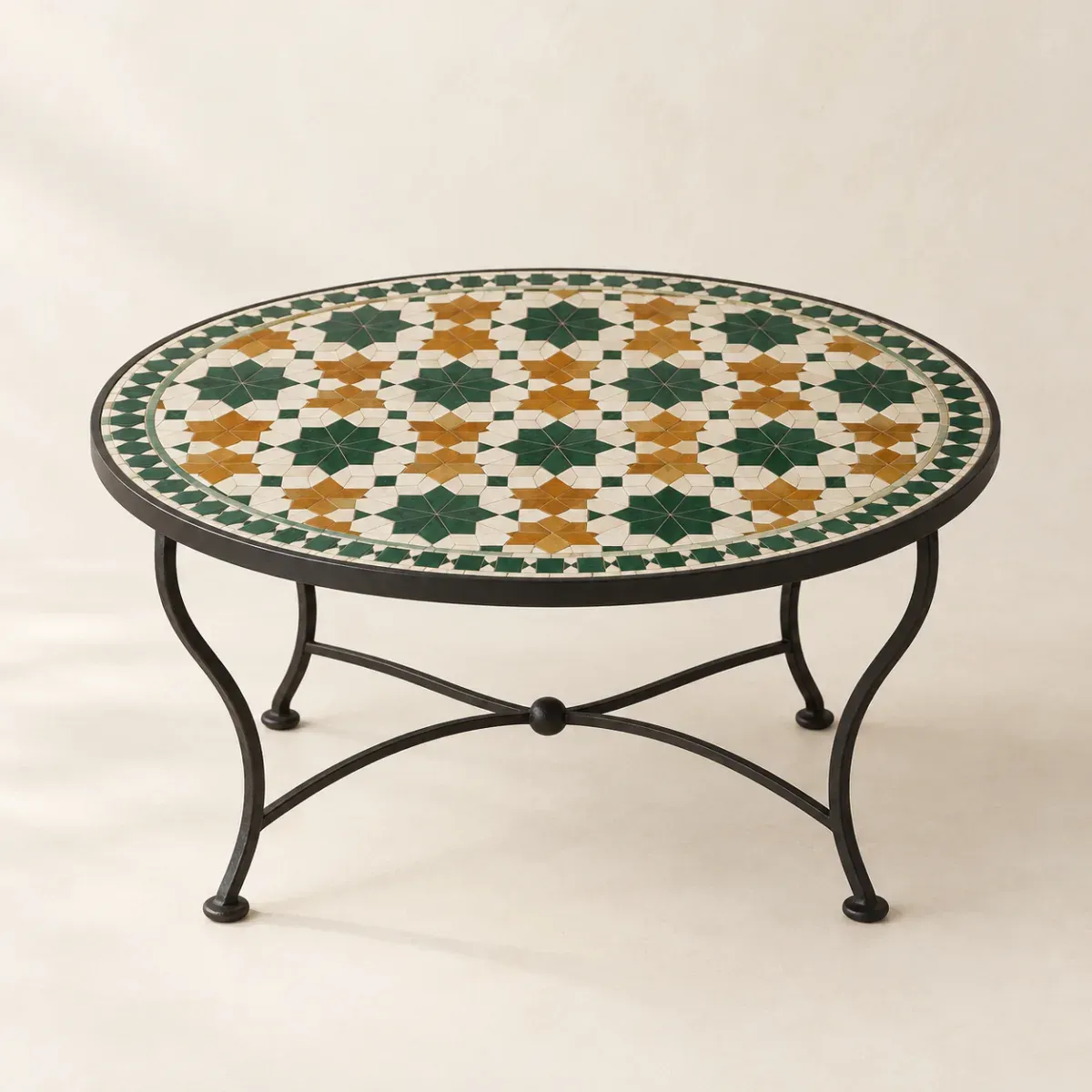
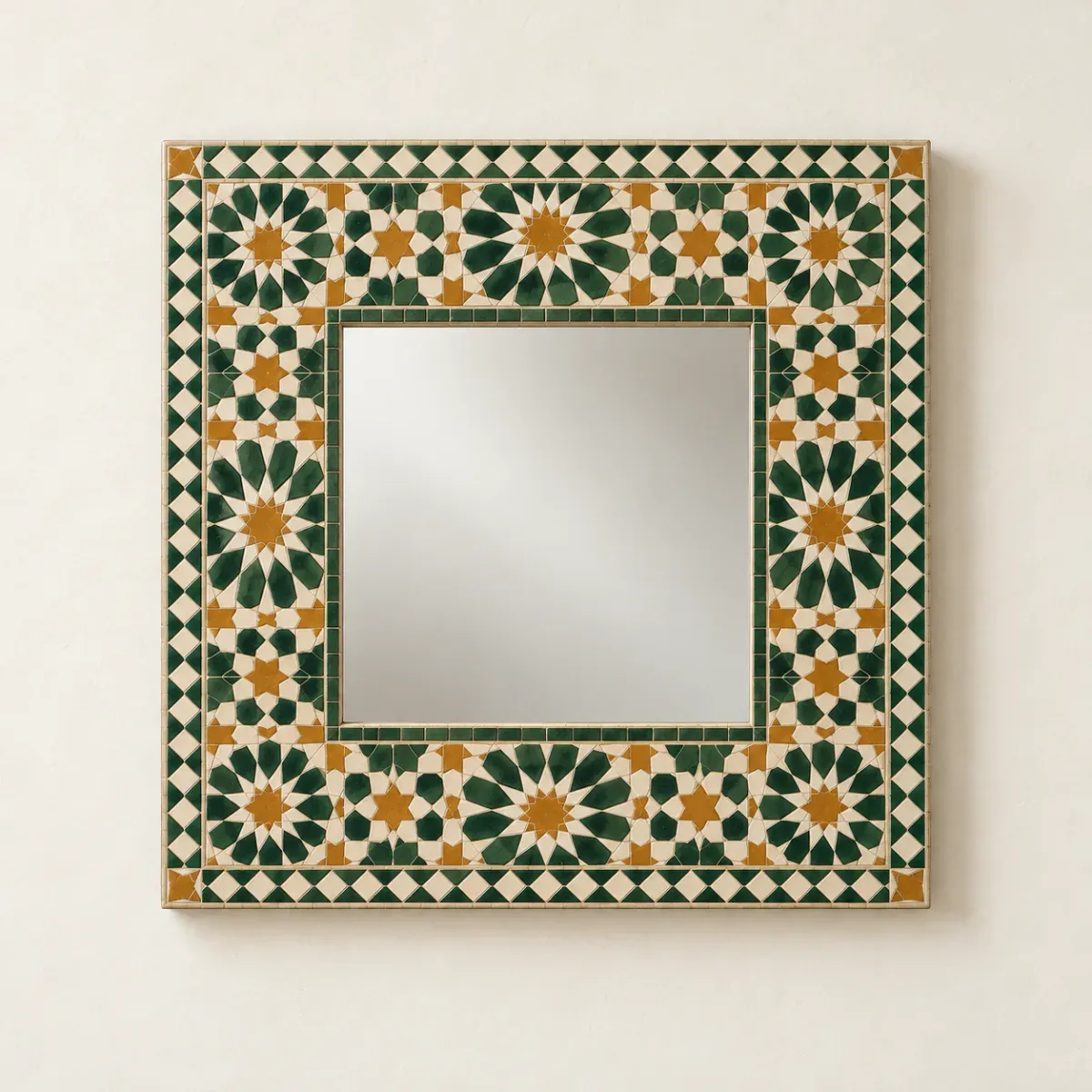
This is the surest test, and it takes a single glance. In cut zellige, every line of the pattern is a joint: the joints follow the outline of the stars, the crosses, the almonds. On a printed or stencil-glazed tile, the pattern is a drawing, and the only joints are those of the tile grid: straight lines running right through the middle of the stars.
Cut and assembled
Printed
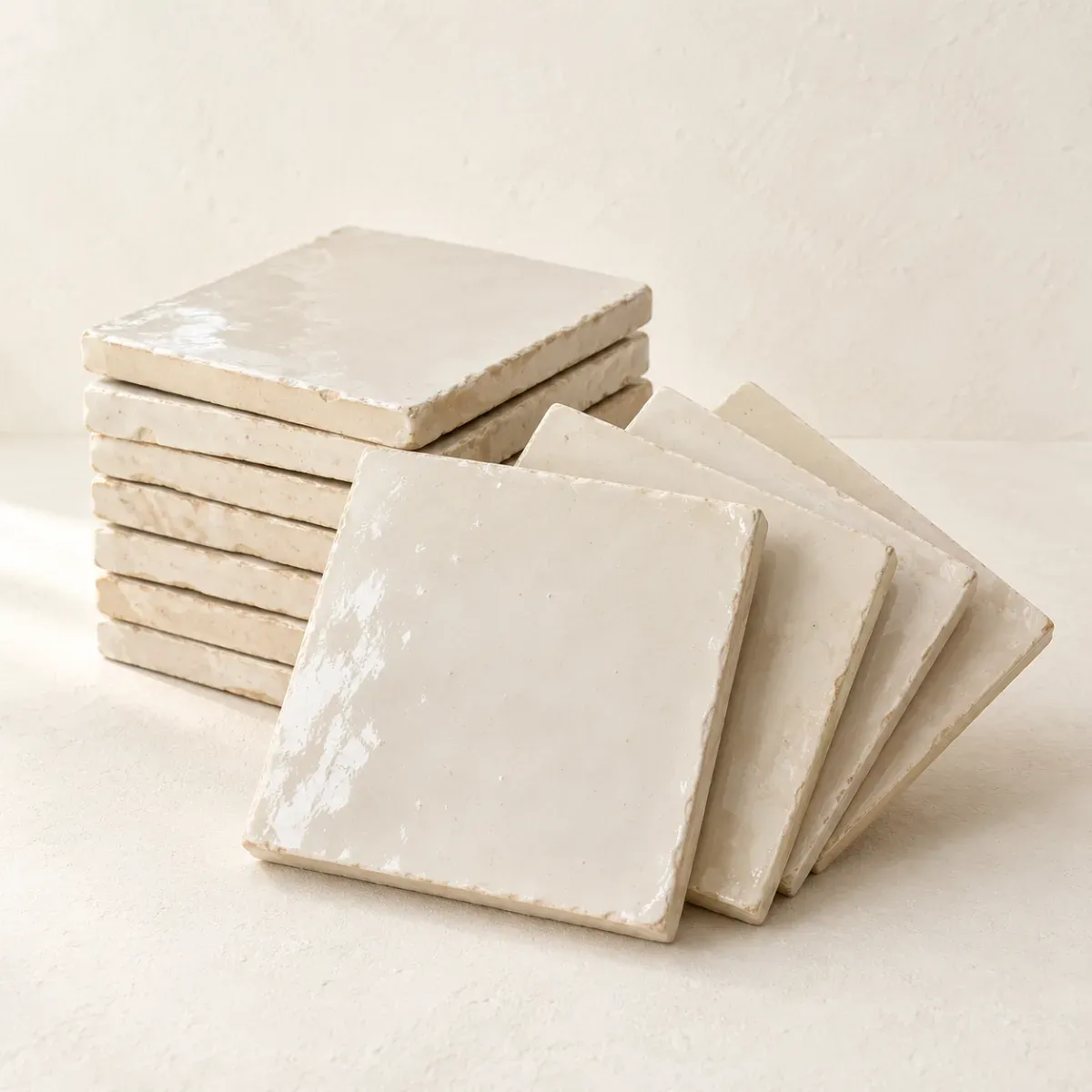
For plain 10 × 10 cm tiles this test does not apply: you have to look at the surface.
Clue 2: the glaze
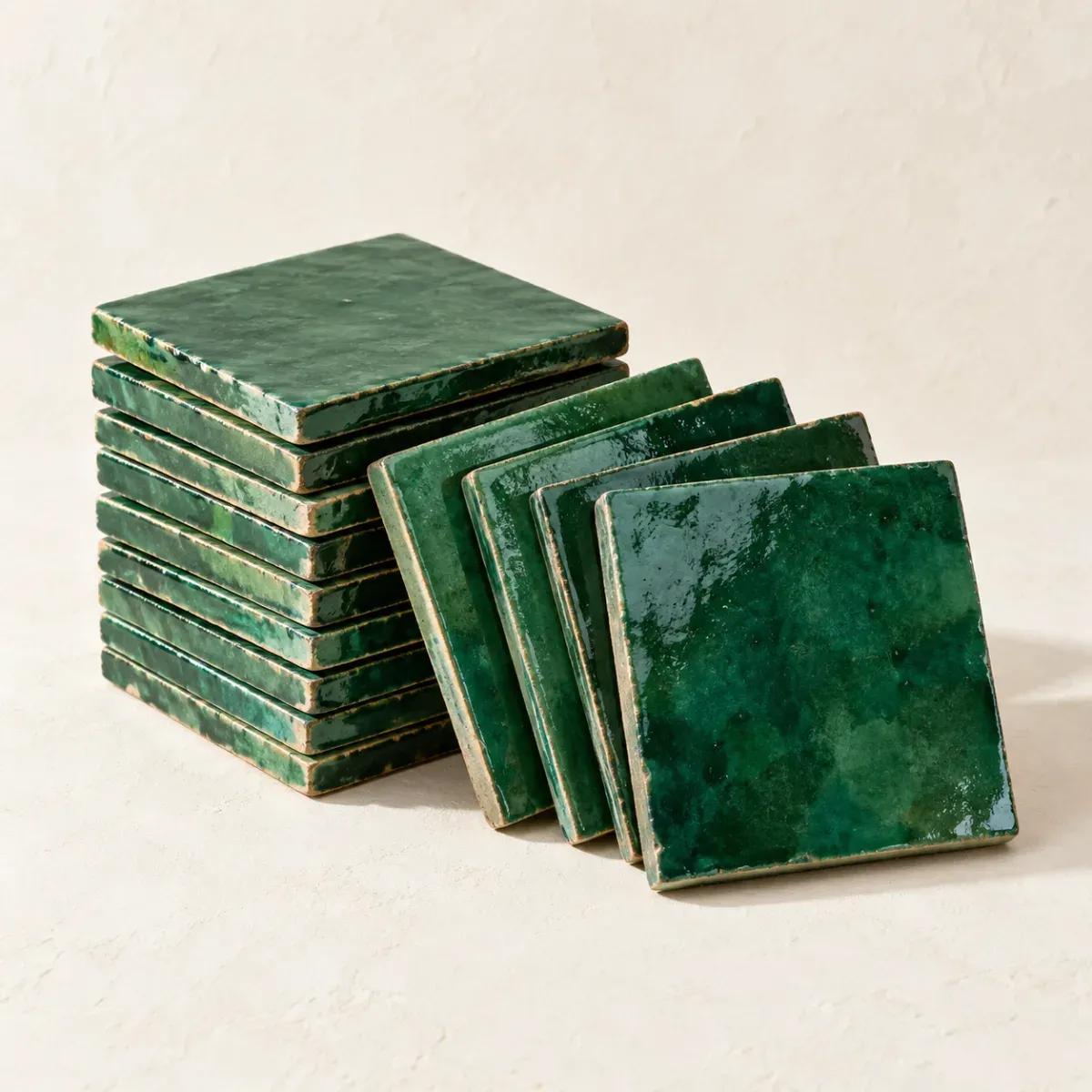
Zellige is shaped and glazed by hand, then fired in a kiln where the heat is never quite even (lesson 2). The result is:
- a surface that undulates slightly and catches the light irregularly;
- shades that vary from one tile to the next, sometimes within a single tile;
- small pinholes, bubbles or fine crazing in the glaze;
- irregular edges, sometimes slightly chipped.
A perfectly flat tile, with sharp edges and an identical shade across a whole pallet, is almost always industrial.
Clue 3: the back and the edge
Turn a cut piece over: its sides slope, bevelled with the hammer (lesson 3), and the back is bare clay. A plain zellige tile is also bevelled on its underside, which allows the one-millimetre joint. A stoneware imitation often carries on its back the regular relief of an industrial mould.
Clue 4: irregularity
Measure a few plain tiles. Handmade zellige varies by a few tenths of a millimetre from one tile to the next, in side as in thickness (about one centimetre for today’s wall tiles, more for old tiles and floors), and its corners are never perfectly sharp. Strictly identical tiles, calibrated to a tenth of a millimetre, come out of an industrial press.
Clue 5: the price
A cut panel calls for thousands of pieces and days of work by several craftsmen. It cannot be cheap. In 2001, a one-square-metre panel with a ten-pointed star already cost more than 1,500 dollars in Fès. A mosaic “zellige” sold at the price of ordinary tiling is almost certainly printed or moulded.
Caring for zellige
Zellige ages well, provided it is treated simply.
- Day to day: a damp cloth, lukewarm water and a mild soap. Black soap, used in Morocco, is very well suited.
- To avoid: acidic products (vinegar, descalers), which attack the joints and the unglazed areas, and abrasive sponges or powders, which scratch the glaze.
- In a shower or a kitchen: have the joints and edges treated with a suitable water repellent if the manufacturer recommends it, and renew it as directed.
- Chips are part of zellige’s life; a damaged piece in a panel can be recut and replaced by a craftsman, as the maâlems who restore monuments do.
- Outdoors, ask the manufacturer whether the tiles are frost-resistant: not every clay is.
Buying with confidence
Ask where the zellige comes from, who cut it and how it was fired. A serious seller answers precisely. At eMaroc, every product page states the city of origin and the technique of the piece.
You have reached the end of the course. You know where zellige comes from, how it is made, drawn, cut and laid, and how to recognise it. The best exercise now is to go and see it: in Fès, Meknès, Marrakech, Tétouan or Granada, or simply more closely, on a wall near you.
Key takeaways
- In real zellige, the joints follow the outline of every piece; on a printed tile, a straight grid runs through the pattern.
- A glaze that undulates, varies in shade and shows small pinholes or fine crazing is the sign of handmade production.
- Turned over, a cut piece shows a bevelled back, marked by the hammer.
- For care: water, mild soap, a cloth; never acid or abrasives.
Watch
Films chosen for this lesson. Nothing loads before you click.
Why Moroccan Zellige Tiles Are So Expensive | So Expensive | Business Insider Video: Business Insider The question every buyer asks: why is zellige so expensive? The answer lies in the hours of work shown in this report filmed in Fès. In English.
Sources
- Louis Werner (2001), Zillij in Fez.
- Ann Shafer (2019), No Man is an Island: Globalisation and Resilience in the Fez zillij Tradition.
- Jean-Marc Castéra (1996), Arabesques. Art décoratif au Maroc.
Zellige in our shop
Pieces cut and glazed by hand, with their town of origin and technique.