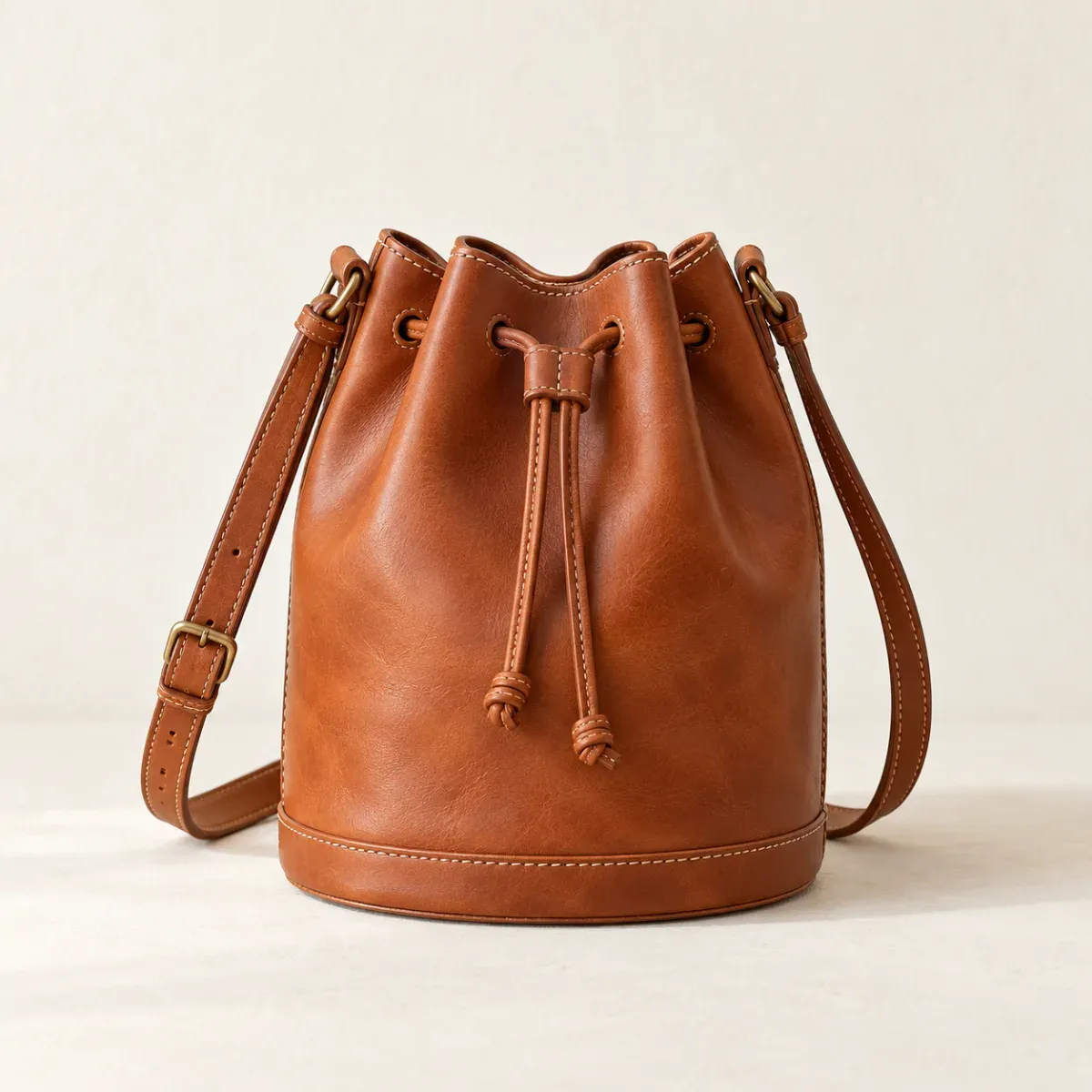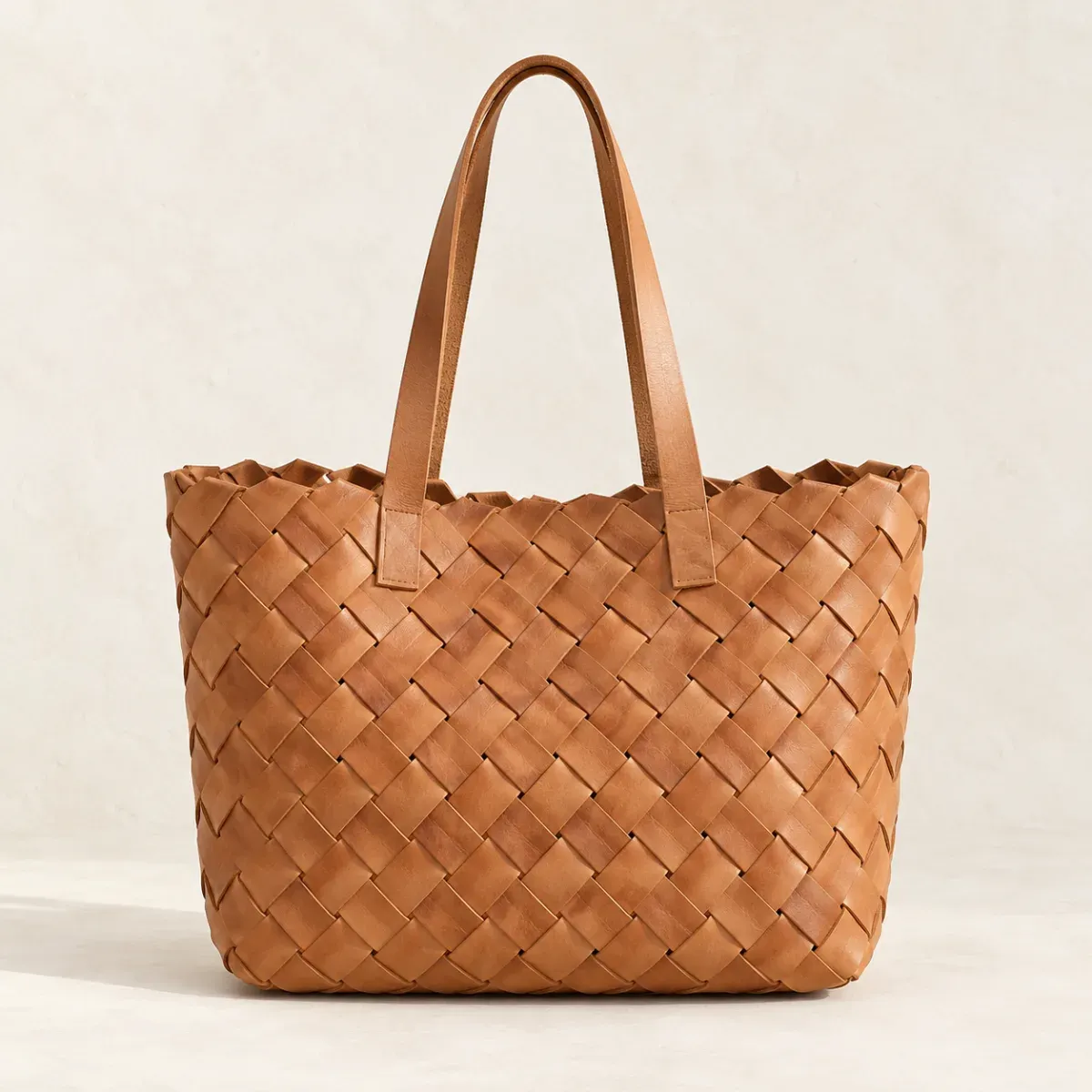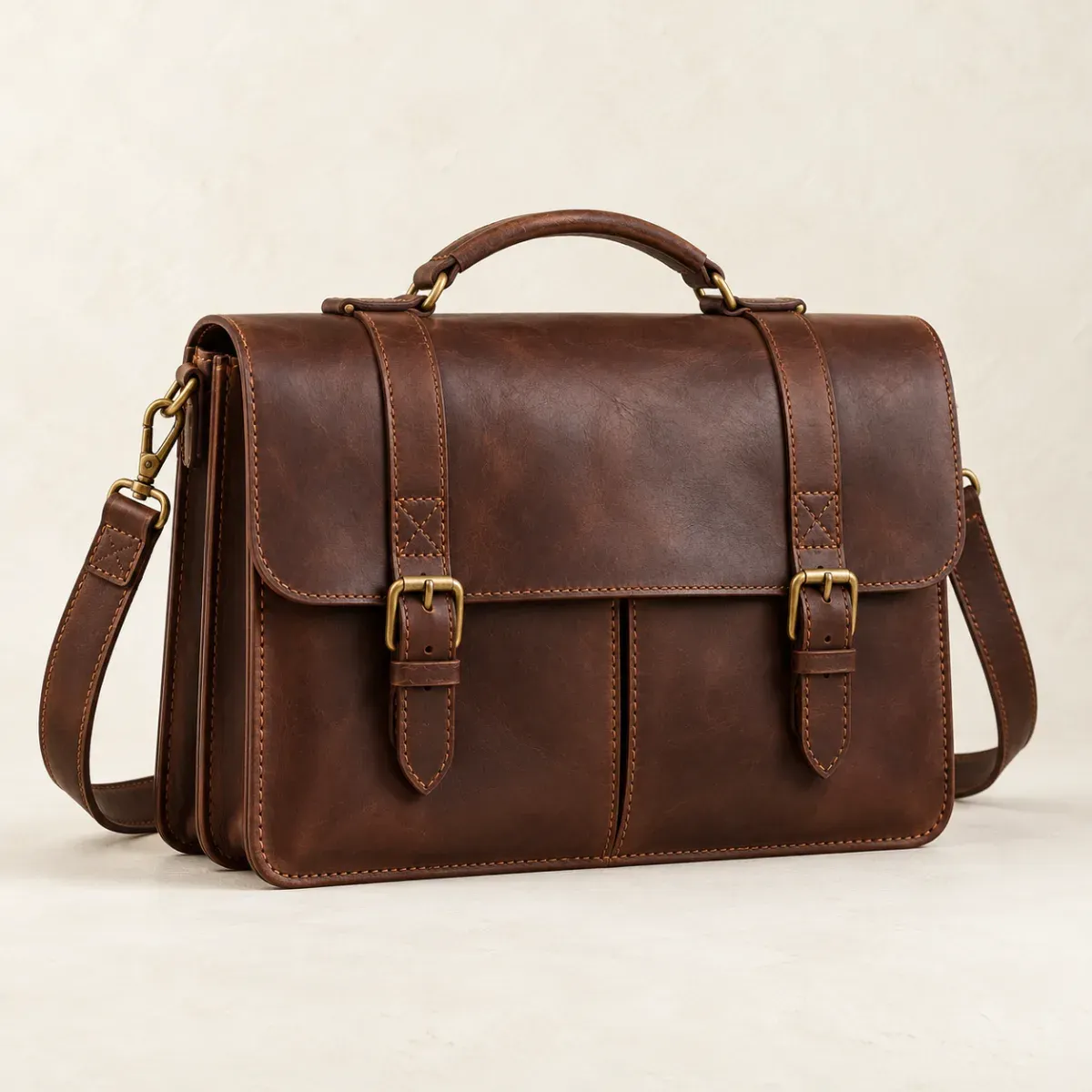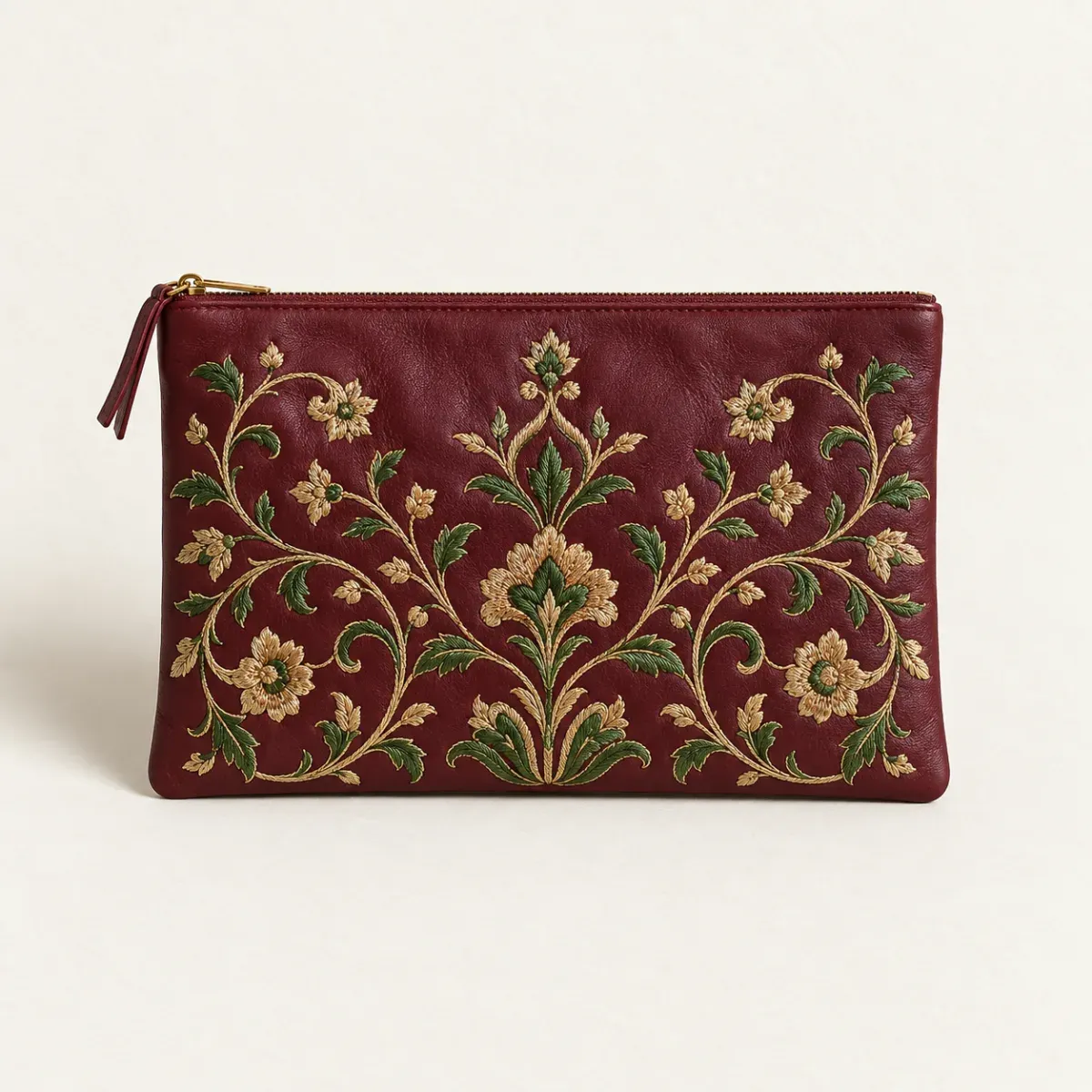

Fez leatherwork and Andalusian leathers
The art of leather
French has said “maroquin” since 1479, and English “cordwainer” owes its name to Córdoba. Between the two shores lie a thousand years of tanneries, stitching and gilded bindings: where Fez leather comes from, who works it and how to recognise it.
A saddle stitch is sewn with a single thread and a needle at each end: if one stitch breaks, the others hold.
Section map
All about Fez leather
Understand where morocco leather comes from, learn the gestures, then design your own piece.
Learn
Etymology
Words that come from our side of the sea
The vocabulary of leather in French and English still bears the mark of Morocco and al-Andalus. First attestations from the Trésor de la langue française; Spanish words from the dictionary of the Royal Spanish Academy.
-
maroquin
1479French · “morocco leather”
- maroquin
- Sp. marroquí
- Morocco
“Peaulx de maroquins” in the accounts of King René: goatskin tanned with sumac or oak galls. By 1901 the word also meant a minister’s portfolio.
-
maroquinerie
1636French · “leather goods”
- maroquinerie
- maroquinier (1562)
- maroquin
“The work and art of the maroquinier” in Philibert Monet’s dictionary. The sense of a shop selling leather goods only arrives in 1933: the word was not born in the 19th century, as is sometimes claimed.
-
cordonnier
c. 1255French · “shoemaker”
- cordonnier
- cordouan
- Ar. qurṭubī, “from Córdoba”
- Córdoba
A cordonnier — like the English cordwainer — was first someone who worked cordouan, the goat leather of Córdoba, known in Gaul as early as the 9th century. The modern spelling drifted towards “cordon” (cord), which has nothing to do with its origin.
-
basane
c. 1150French · “sheepskin”
- basane
- Sp. badana
- Ar. biṭāna, “lining”
Tanned sheepskin, suppler and less hard-wearing than goat. It was this leather that Córdoba silvered, gilded and painted to make guadamecís.
-
guadamecí
Spanish · masculine noun
- guadamecí
- Hisp. Ar. ḡadamisí
- Ghadames
The silvered, gilded and painted leather that was Córdoba’s pride. The word does not come from Córdoba but from the Arabic ghadāmisī, “from Ghadames”, an oasis in present-day Libya.
-
Saffian
German · masculine noun
- Saffian
- Safi
In German, morocco leather is called Saffian, after Safi, the Moroccan Atlantic port renowned for its leathers.
A type of leather, not an origin. The “morocco” of European bookbinders meant goatskin tanned with sumac and dyed, prized because it sets off gilding. It did not always come from Morocco: some of the finest skins came from northern Nigeria or Anatolia, and “French morocco” was even sheepskin.
Timeline
From Córdoba to Fez, a thousand years of leather
The documented dates, and only those. Where sources disagree, we say so.
- Morocco
- Al-Andalus and Spain
- Elsewhere
-
789–818
FezFez and the families of Córdoba
Idris I founds Madinat Fas in 789, Idris II the town of al-ʿAliya in 809. In 817–818, families driven out of Córdoba after the revolt of the suburb settle on the bank that takes the name of the Andalusians.
-
8th–10th c.
CórdobaCórdoba leather
Córdoba works goatskin (cordobán) and decorated leather (guadamecí); historians date its beginnings between the 8th and the 10th century. Before 821, Theodulf of Orléans already mentions skins “named after Corduba”.
-
early 12th c.
FezThe first recorded tannery
The Rawd al-Qirtas chronicle names the Sidi Moussa tannery: the oldest reliable mention of a tannery in Fez.
-
c. 1126
MarrakechBab Debbagh, the tanners’ gate
The Almoravids encircle Marrakech with walls. Their eastern gate takes its name from the tanners settled near the river.
-
12th–14th c.
Fez86 workshops, then about a hundred
Under the Almohads, Fez has 86 tanning workshops. Under the Marinids, who found Fez el-Jdid in 1276, the city has about a hundred.
-
after 1492
TetouanTetouan, an Andalusian town
After the fall of Granada, Andalusian refugees rebuild Tetouan. Its medina, and its small tannery, still bear their mark.
-
1529
CórdobaThe guadamecileros’ ordinances
On 1 January 1529, Córdoba regulates the craft of silvered and painted leather, one of the city’s leading industries in the 16th century.
-
1619
FezA bookbinding treatise in Fez
Al-Sufyānī writes The Art of Bookbinding and Gilding: sewing the gatherings, covering in leather, tooling in gold. Prosper Ricard edits it in 1919, then in 1925.
-
19th c.
WorldChrome tanning
Chromium salts enter tanning, all over the world and as far as Fez. Much faster, the process has since existed alongside vegetable tannins.
-
1981
FezThe medina, a World Heritage site
UNESCO inscribes the medina of Fez, with its souks and craft quarters, on the World Heritage List.
-
2013–2016
FezThe tanneries restored
The medina restoration programme launched in 2013 renovates Sidi Moussa, Aïn Azliten and Chouara. Tanners return to work there in 2016.
Chouara, the largest tannery in Fez, has no documented founding date: “the oldest tannery in the world” is a tourist slogan, not a fact.
In figures
The Fez leather trade today
Four figures, from the review published by the Fès-Meknès Chamber of Crafts and from a master babouche maker of the medina.
- 800+
- tanners in Fez, 45% of all tanners in Morocco
- Chamber of Crafts, 2019
- 40%
- of the turnover of Fez crafts comes from leather
- Chamber of Crafts, 2019
- 97.3
- million dirhams (MDH) to restore the tanneries of the medina
- Chamber of Crafts, 2019
- 24
- steps for a ziwani babouche from Fez, all done in the workshop
- Le360, 2025
The hides
Four leathers, four characters
Grain, thickness and suppleness depend on the animal. The swatches below are indicative: every hide has its own shade.
-
Goat
Morocco, kid
Thin and supple, with a more or less pronounced grain. It takes dye and gilding well: the leather of Fez babouches and of bookbindings.
- Uses:
- babouches, small leather goods, bookbinding, poufs.
-
Cowhide
Cow, calf
Thick and sturdy. In Fez, the Sidi Moussa tannery historically specialised in it.
- Uses:
- bags, belts, soles.
-
Lamb and sheep
Basane (sheepskin)
Suppler and less hard-wearing than goat, soft to the touch. Sheepskin was the ground for Córdoba’s guadamecí.
- Uses:
- linings, clutches, decorated leather.
-
Camel
Camel leather
Chouara also tans camel hides. It is said to be lighter than cowhide, with denser fibres.
- Uses:
- bags, poufs, babouches.
These qualities are described only by sellers: we do not present them as established.
An irregular grain, visible pores or a small scar are normal on full-grain leather: they show a hide that has been neither sanded nor coated.
The places
Tanneries and places of leather
The traditional tanneries still working in Morocco, and Córdoba, which gave Andalusian leather its name.
-
Chouara
The largest of the three tanneries of Fez el-Bali, on the Fez river near the Seffarine madrasa. Restored in 2015–2016, it is seen from the terraces of the shops around it.
Working
-
Sidi Moussa (Guerniz)
Near the zawiya of Moulay Idriss II and the Nejjarine museum. The best documented tannery in Fez, historically devoted to cowhides.
Working
-
Aïn Azliten
The most recent of the medina’s tanneries, in the north of Fez el-Bali. Tanners went back to work there in 2016, after the restoration.
Working
-
Bab Debbagh
The oldest and largest tanners’ quarter of Marrakech, at the eastern gate of the medina. The water for the vats comes from the nearby river.
Working
-
Dar Debbagh
At the end of a lane leading to Bab el-Mqabar, the small tannery of Tetouan’s Andalusian medina. It is said to be five centuries old, without a reliable source.
In decline
-
Taroudant tannery
Past Bab Targhount, 60 to 70 people work there without machines, with mimosa bark, cork oak, pomegranate rind, pigeon droppings and bran.
Working
-
Córdoba
The birthplace of cordobán and guadamecí, which gave French cordouan and cordonnier, and English cordwainer. Its guadamecileros received their ordinances in 1529.
Place of memory
Dyes: heritage and practice. The poppy, indigo or saffron that visitors are told about belong to historical heritage. Today most dye baths use synthetic dyes, and some hides are chrome-tanned. We only advertise vegetable tanning when the tanner certifies it.
Go further
See, learn, design
The tannery in three dimensions, the workshop’s gestures step by step, then your own piece.
eMaroc leather goods
Pieces cut and stitched by hand
Cowhide, goatskin or lambskin, saddle stitching and dyed edges: pieces made to last and to take on a patina.