
Bibliography
The masters’ books
The books and papers behind this section and our patterns, with full references. The ISBNs given were checked against library catalogues.
Zellige and the art of Morocco
-
(1979). Le Maroc et l’artisanat traditionnel islamique dans l’architecture. Éditions Atelier 74, Saint-Jorioz, 2 vol..
ISBN vol. 1 : 2-86486-001-5 · vol. 2 : 2-86486-002-3
The reference survey, made for Hassan II: named patterns, constructions, zellige, carved plaster and wood. Two volumes.
View — Le Maroc et l’artisanat traditionnel islamique dans l’architecture
-
(1996). Arabesques. Art décoratif au Maroc. ACR Édition, Courbevoie.
ISBN 2-86770-096-5
The major book on contemporary Moroccan decoration, by a specialist of constructions and quasicrystals. English edition 1999.
-
(1992). Zillij: The Art of Moroccan Ceramics. Garnet, Reading.
ISBN 1-873938-02-0
A collective monograph on Moroccan zellige, from clay to laying.
-
(2001). L’Art de la céramique dans l’architecture musulmane. Flammarion, Paris.
ISBN 2-08-010876-X
-
(2020). Architecture of the Islamic West: North Africa and the Iberian Peninsula, 700–1800. Yale University Press.
ISBN 978-0-300-21870-1
Islamic geometry
-
(2017). Islamic Geometric Patterns: Their Historical Development and Traditional Methods of Construction. Springer, New York.
ISBN 978-1-4419-0216-0
The history and the polygonal technique, family by family; with a chapter by Craig Kaplan on computer drawing.
-
(2008). Islamic Geometric Patterns. Thames & Hudson, Londres.
ISBN 978-0-500-28721-7
A ruler-and-compass introduction, pattern by pattern.
-
(2013). Islamic Geometric Design. Thames & Hudson, Londres.
ISBN 978-0-500-51695-9
Pattern analysis by monument, from Morocco to Central Asia.
-
(1976). Islamic Patterns: An Analytical and Cosmological Approach. Thames & Hudson, Londres (éd. brochée 1983).
ISBN 0-500-27071-6
An analytical and cosmological reading of the patterns, foreword by Seyyed Hossein Nasr.
-
(1976). Geometric Concepts in Islamic Art. World of Islam Festival Publishing, Londres.
ISBN 0-905035-03-8
The proportional grids behind the patterns, foreword by Titus Burckhardt.
-
(1976). Pattern in Islamic Art. Studio Vista, Londres / Overlook Press, Woodstock.
ISBN 0-87951-042-0
A classic, continued by the author’s online photo archive.
-
(1995). The Topkapı Scroll: Geometry and Ornament in Islamic Architecture. Getty Center, Santa Monica.
ISBN 0-89236-335-5
A 15th-century scroll of architects’ drawings; the book is a free download.
View — The Topkapı Scroll: Geometry and Ornament in Islamic Architecture
Early sources (public domain)
-
(1879). Les Éléments de l’art arabe : le trait des entrelacs. Firmin-Didot, Paris.
Nearly two hundred plates of interlace constructions, now in the public domain.
-
(1856). The Grammar of Ornament. Day & Son, Londres.
The “Moresque” plates after the Alhambra.
-
(1925). The Drawing of Geometric Patterns in Saracenic Art. Memoirs of the Archaeological Survey of India, no. 15, Calcutta.
The first description of the “polygons in contact” method.
Papers and studies
-
(2018). Le technolecte du zellige au Maroc. Revue Langues, cultures et sociétés 4 (2), p. 28-34.
The vocabulary of the Fez zellige makers: names of pieces, tools and gestures.
-
(2001). Zillij in Fez. Saudi Aramco World 52 (3).
A precise report from the Fez workshops: sizes, colours, laying, figures.
-
(2007). Decagonal and Quasi-Crystalline Tilings in Medieval Islamic Architecture. Science 315 (5815), p. 1106-1110 — doi:10.1126/science.1135491.
The quasi-crystalline tilings of medieval Islamic decoration.
View — Decagonal and Quasi-Crystalline Tilings in Medieval Islamic Architecture
-
(2005). Islamic Star Patterns from Polygons in Contact. Graphics Interface 2005, p. 177-185.
The algorithm of the polygonal technique, the one our generator uses.
-
(2019). No Man is an Island: Globalisation and Resilience in the Fez zillij Tradition. The Journal of North African Studies 24 (5), p. 758-785.
Fez zellige facing globalisation.
Online resources
-
. Tiling Search — base de données des pavages islamiques. tilingsearch.mit.edu.
Thousands of panels classified by symmetry and monument.
View — Tiling Search — base de données des pavages islamiques
-
. Pattern in Islamic Art — photothèque. patterninislamicart.com.
David Wade’s photo archive, by country and monument.
In our collections
Zellige at home
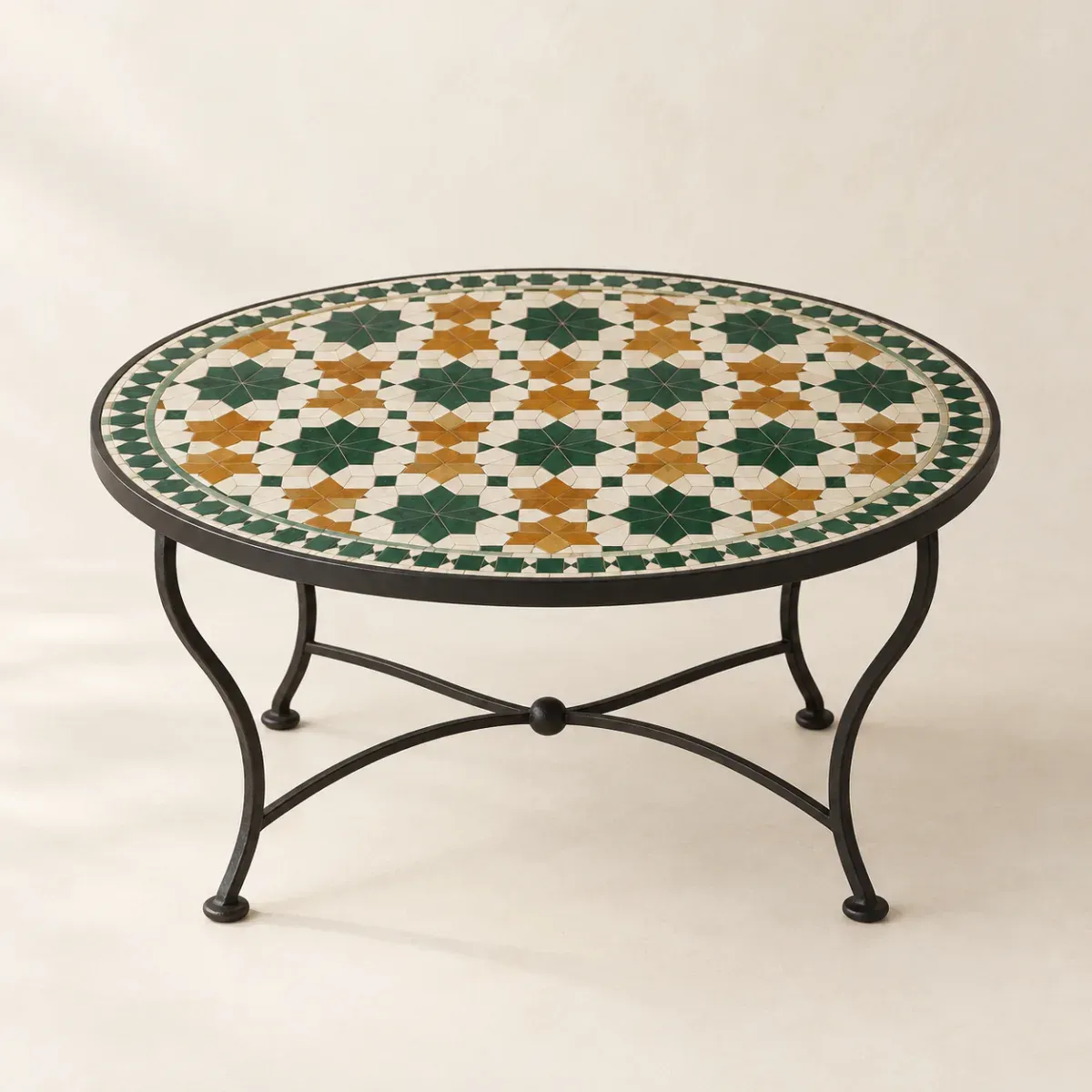
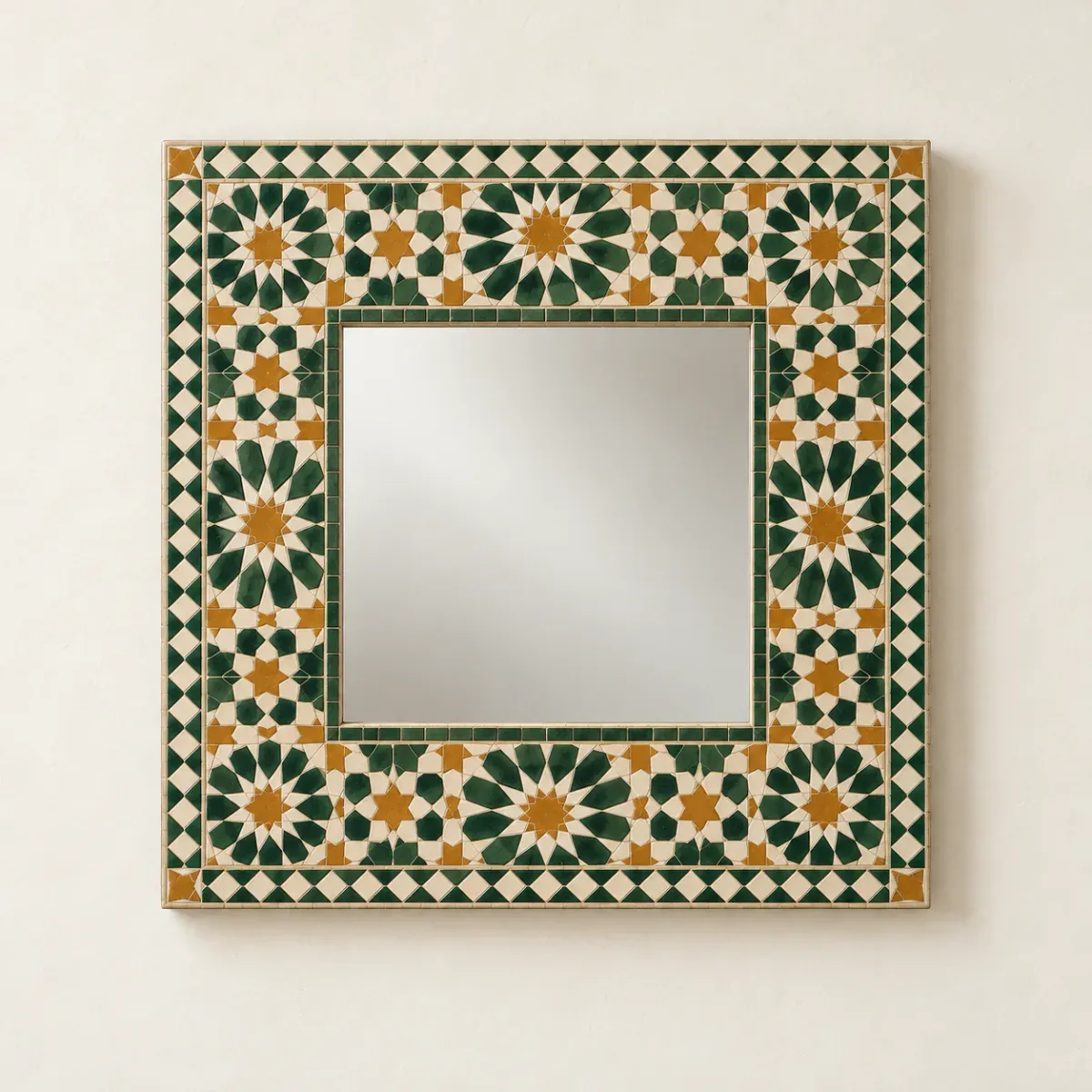
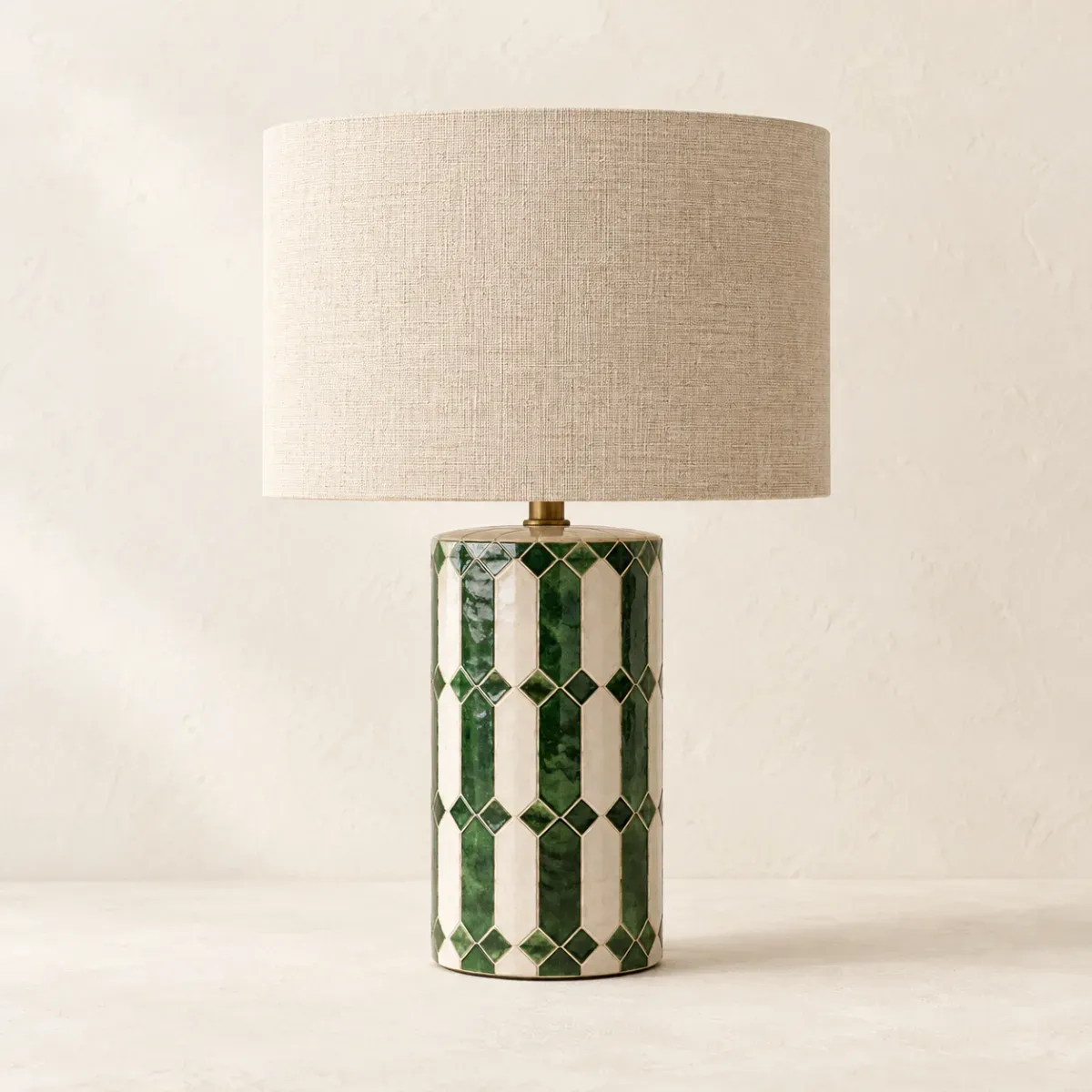
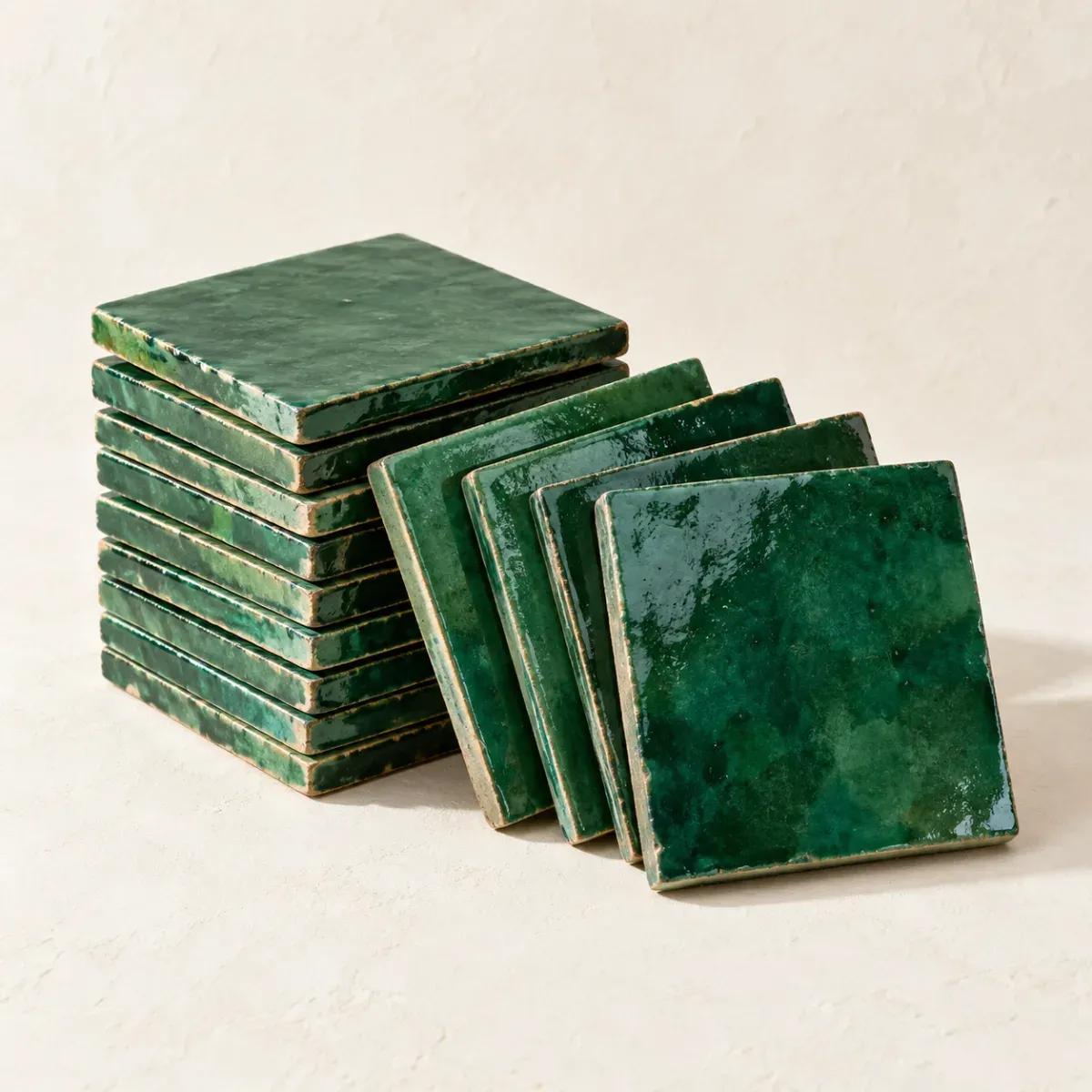
Tables, mirrors, lamps and tiles cut by hand in Fez and Tetouan.