
The whole chain of a Fès workshop: clay, kiln, glaze, then every piece cut with the hammer and the panels assembled. The film also explains the price of zellige and how hard it is to pass the craft on.
Free course
Zellige course
Ten lessons to learn how to look at, draw and recognise zellige, from the grey clay of Fès to the sixteen-pointed rosette. Written from the work of historians and master craftsmen, illustrated with exact drawings and workshop films.
- 10 lessons
- 34 min of reading in all
- 3 drawing exercises
- 15 workshop films
The syllabus
The lessons follow the chain of the craft: earth, tools, geometry, pieces, compositions, laying. Allow four to five minutes of reading per lesson, a little more with the films.
- Lesson 1 What is zellige? A precise definition, the origin of the word and a thousand years of history, from Ifriqiya to the madrasas of Fès and the palaces of Granada.
- Lesson 2 Clay, kiln and glaze From the grey clay of the hills around Fès to the two firings and the glazes coloured with copper and minerals.
- Lesson 3 Tools and gestures The menqach hammer, the anvil, the template: how a piece comes out of a tile, and why its back is cut on a bevel.
- Lesson 4 Drawing the khatem with compass and ruler The basics of geometry: a circle, two diameters, two squares, and the eight-pointed star appears. Printable exercise.
- Lesson 5 The pieces and their families Khatem, qamarchouna, louza, mtemmen: the pieces have names, and those names map out a grammar.
- Lesson 6 Eight-fold fields: stars and crosses How a star becomes a wall: the grid, the star and the cross, then the khatem field drawn from the tiling of octagons and squares.
- Lesson 7 Twelve- and sixteen-pointed rosettes A star at the centre, a crown of petals around it: the rule of the rosette, applied to twelve and then sixteen points.
- Lesson 8 The great compositions Medallion, field, borders: the anatomy of a panel, and the giant rosettes of 24, 48 or 96 points.
- Lesson 9 Assembling a panel: laying face down The layer works without seeing the pattern: glazed face against the ground, from the centre outwards, before pouring the back and lifting the panel.
- Lesson 10 Recognising real zellige and caring for it The joints, the glaze, the back, the price: five clues for recognising cut zellige, and the right habits to keep it beautiful.
How to follow this course
In order, ideally: each lesson builds on the previous ones.
With a compass and a ruler for lessons 4, 6 and 7: their exercises can be printed.
Three questions at the end of each lesson. Your answers stay in your browser.
Films only load when you click them: nothing is sent to YouTube before.
Zellige masters at work
Fifteen films from workshops, museums and television, chosen for what they show of the craft.
Why Moroccan Zellige Tiles Are So Expensive | So Expensive | Business Insider Video: Business Insider L'argile de Fès, le trésor du zellige l À l'école des artisans Ep.4 Video: Le360 News At the Academy of Traditional Arts in Casablanca, apprentices study the clay of Fès, the only one the maâlems accept for zellige, and what makes it special.
From clay to vibrant tiles: Fez's Zellige gains global traction Video: AP Archive News-agency footage from the potters’ village near Fès: clay pressed into moulds, tiles dipped in glaze, smoke rising from the kilns. A workshop owner explains the return to natural fuels.
In our collections
Zellige at home
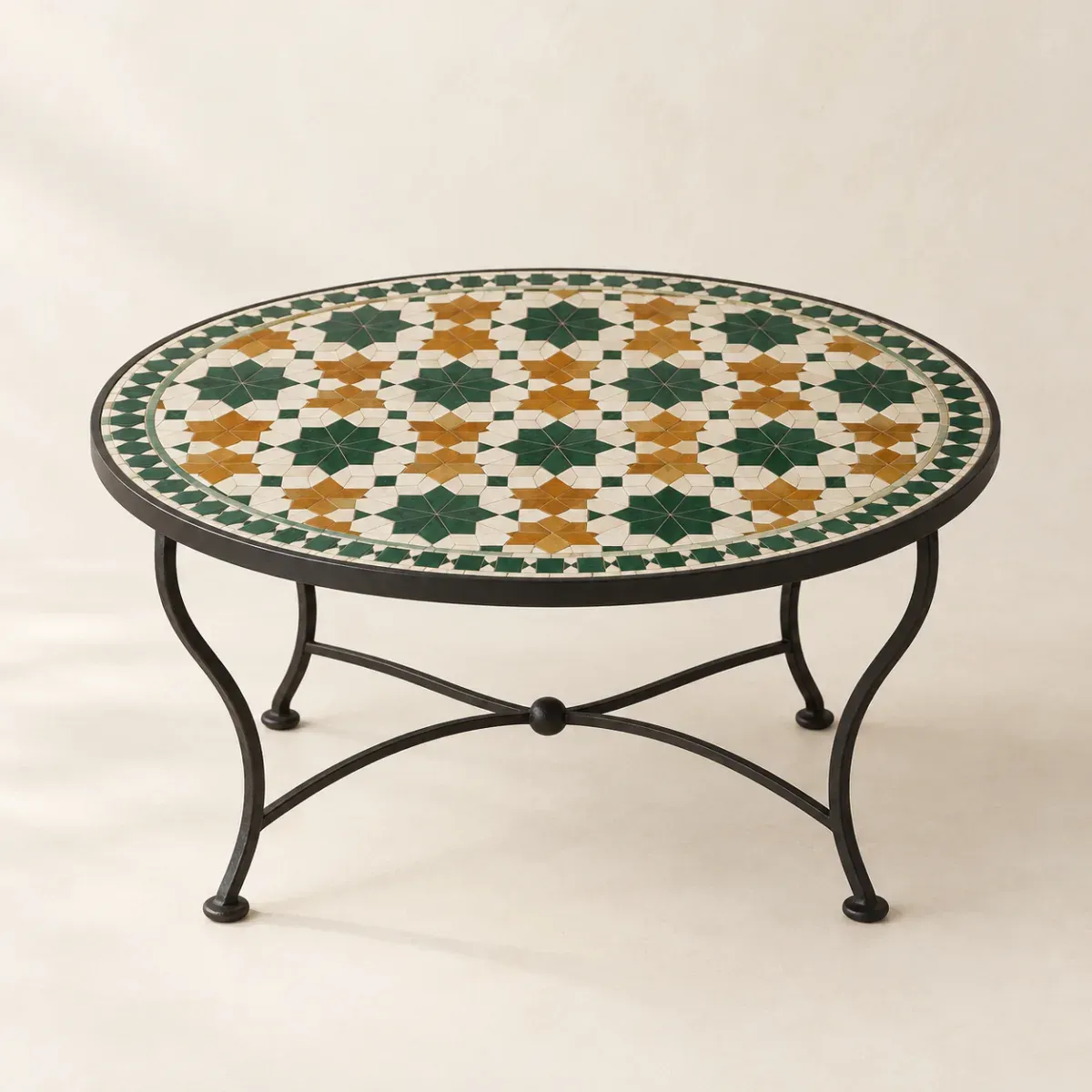
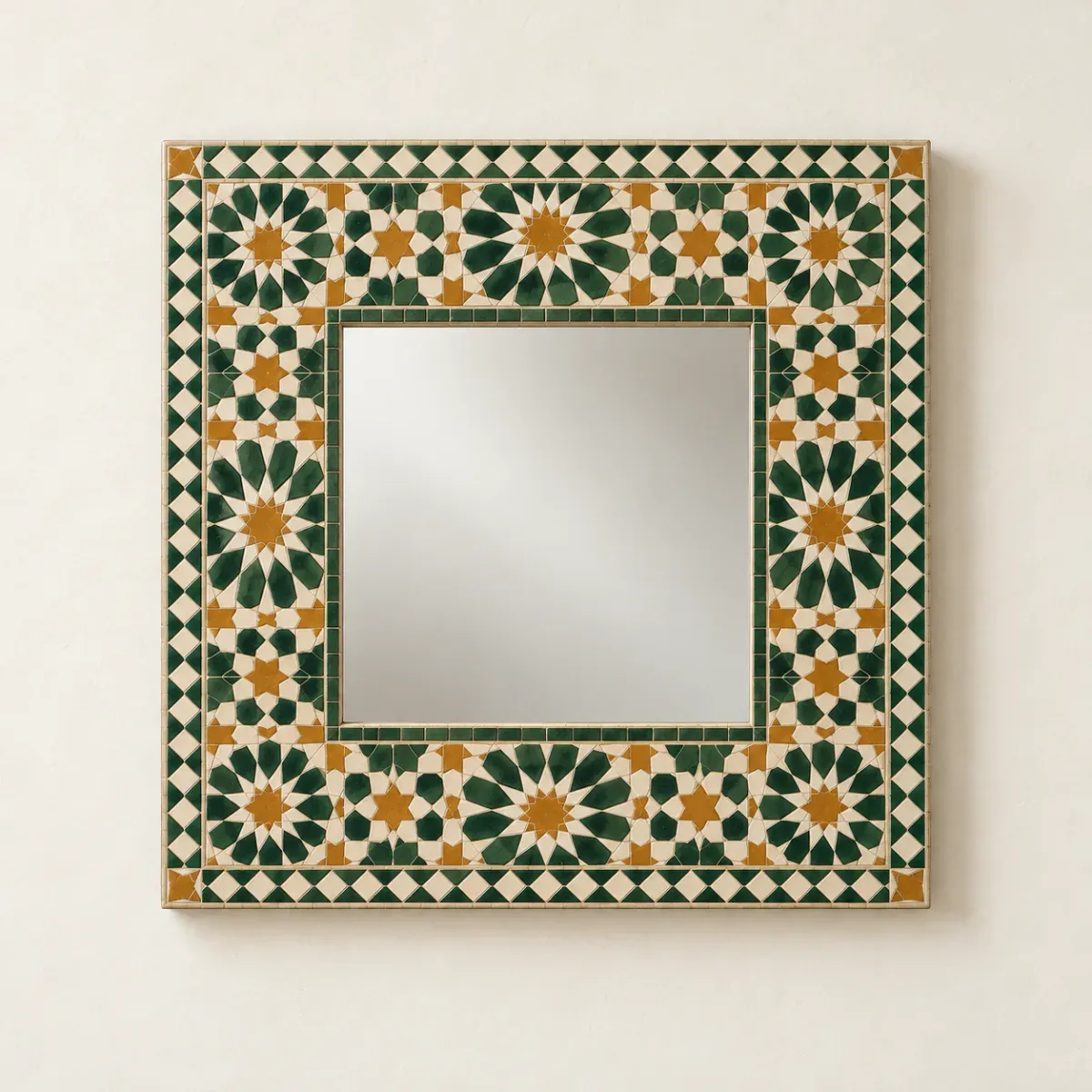
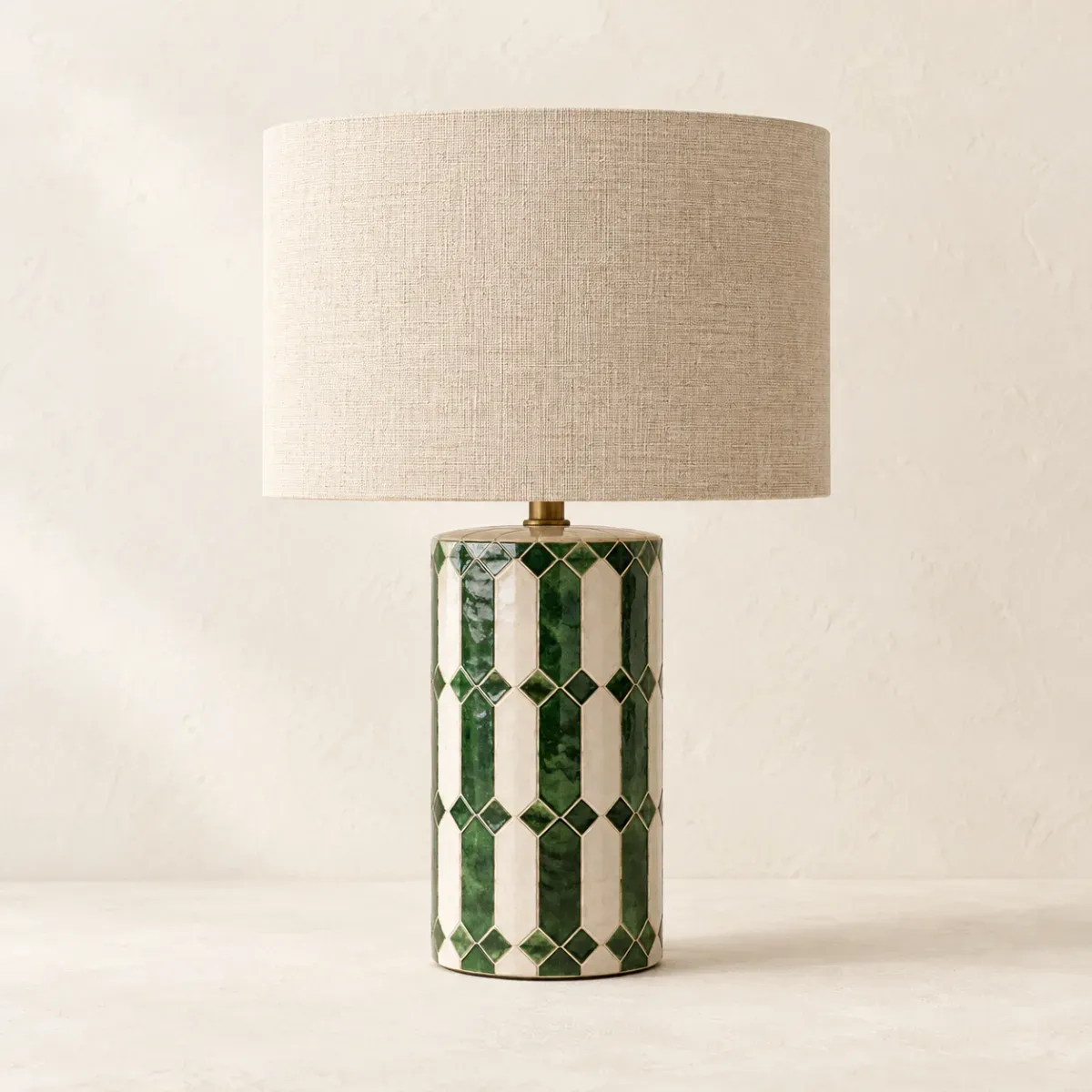
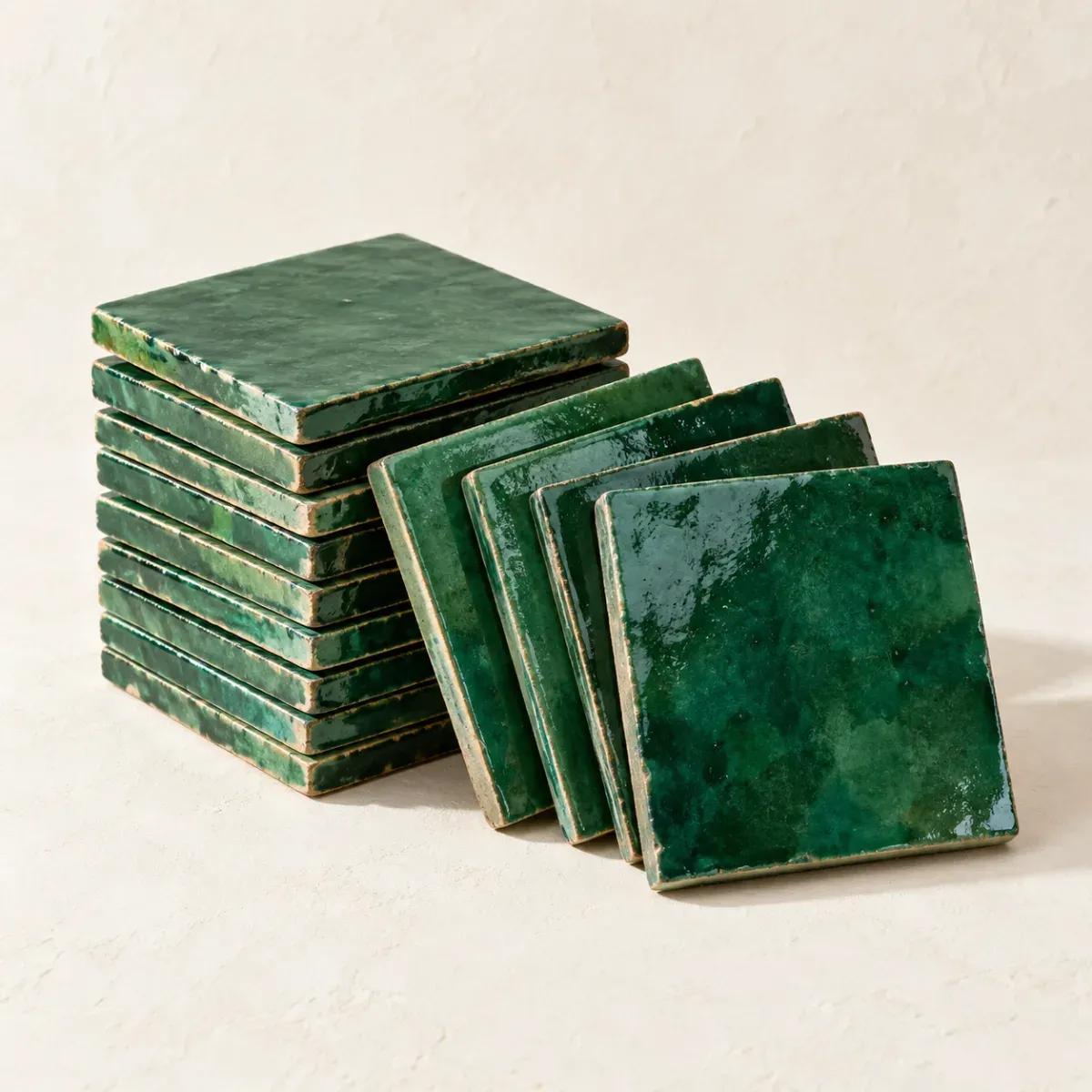
Tables, mirrors, lamps and tiles cut by hand in Fez and Tetouan.