
Workshop
Draw, cut, lay face down
A zellige panel is assembled back to front: the layer never sees the glaze while working. Follow our great rosette from the layout drawing to the moment the panel is turned over.

The five stages of a panel
-
The layout
Everything starts from a circle divided into equal parts, a multiple of four or six. In Fez, the layer pencils a partial full-size drawing on the workshop floor, then completes it. The construction rules, handed down from master to apprentice, make up the tastir.
-
Cutting
The cutter starts from glazed tiles about 10 cm square. He draws the shape, knocks it out with an edged hammer, the menqach, on a steel-tongued anvil, and a finisher bevels the back: only the glazed edges will touch.
-
Laying face down
The pieces are laid glaze-down inside a frame, starting from the centre; each ring is pushed towards the heart to tighten the joints. Laid this way, the face will be perfectly flat.
-
Pouring
Dry cement is dusted between the backs, and a screed about 7 cm thick is poured the next day. In the past the pieces were bound with plaster or lime; in Granada that plaster held esparto and reed fibres.
-
Turning over
Once set, the panel is turned over, taken out of its frame and cleaned of the mortar that seeped between the joints, then fixed to the wall or floor in one piece. At the Alhambra in 1982, restorers lifted a Comares dado this way to reset it on a reinforced slab.
- 10 cm
- side of a starting tile
- 360
- shapes of piece recorded
- ≈ 7 cm
- of mortar behind the panel
- 5,000
- pieces for a 24-point fountain
The shapes
Twenty-one shapes for one panel
Every piece of our great rosette, at the same scale, with its count. The names are descriptive: we give a workshop name only where it is attested.
-
Heart star
Glazes: red
-
Heart petal
Glazes: white
-
Heart lozenge
Glazes: black
-
Sun hollow
Glazes: white
-
Ray
Glazes: honey
-
Thread
Glazes: black
-
Flame
Glazes: yellow, cobalt
-
Lobe side
Glazes: white
-
Dart
Glazes: red
-
Arrow
Glazes: sky blue
-
Point
Glazes: yellow
-
Bead
Glazes: white
-
Stud
Glazes: black
-
Satellite petal
Glazes: yellow, sky blue
-
Chevron
Glazes: red, honey
-
Grain
Glazes: black
-
Msedds, the hexagon
Glazes: green
-
Satellite star
Glazes: cobalt, red
-
Frame corner
Glazes: black
-
Field piece
Glazes: green
-
Brick
Glazes: black, white
For a twenty-four-point fountain, a Fez workshop counted about 5,000 pieces in 32 shapes and eight colours (Werner, 2001).
In our collections
Zellige at home
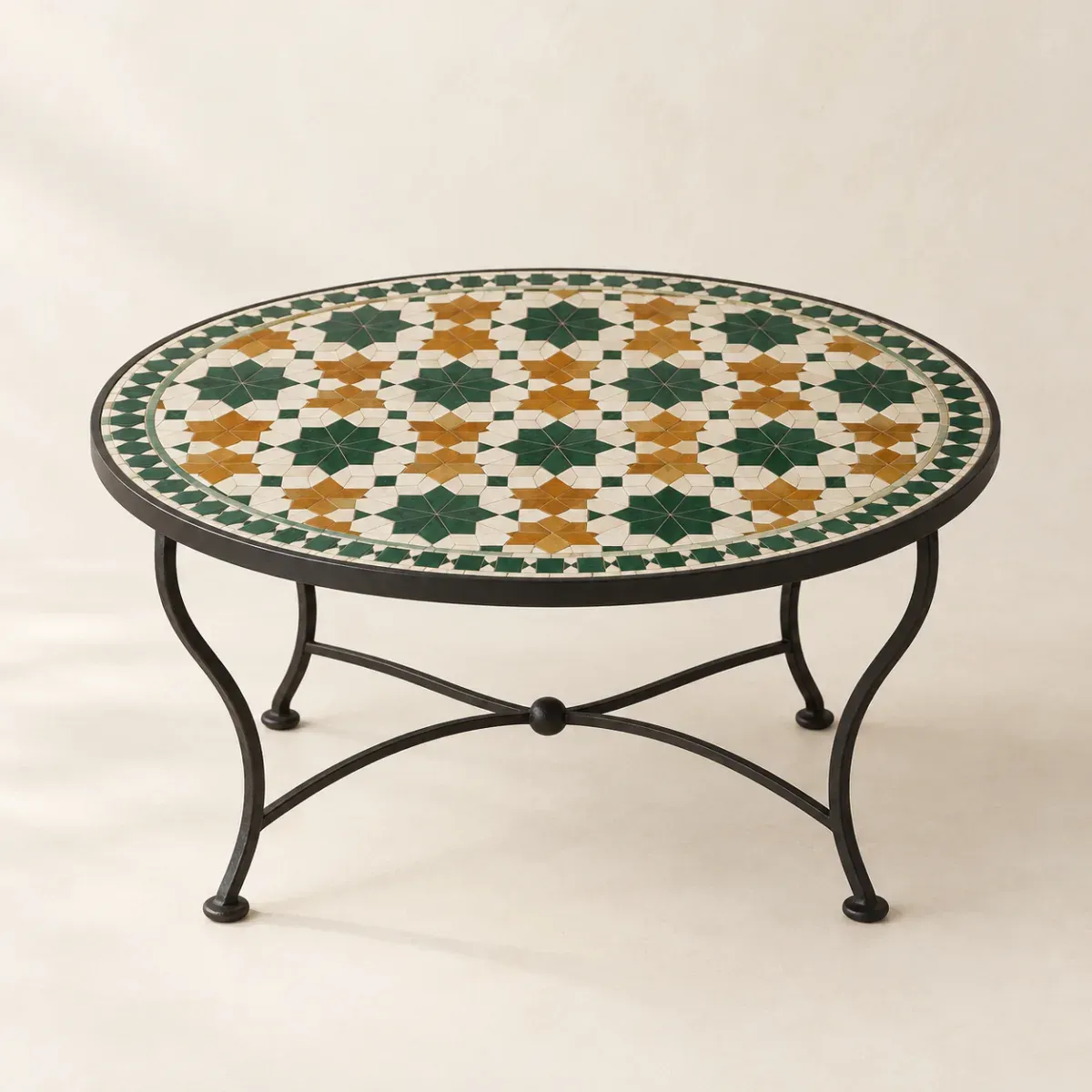
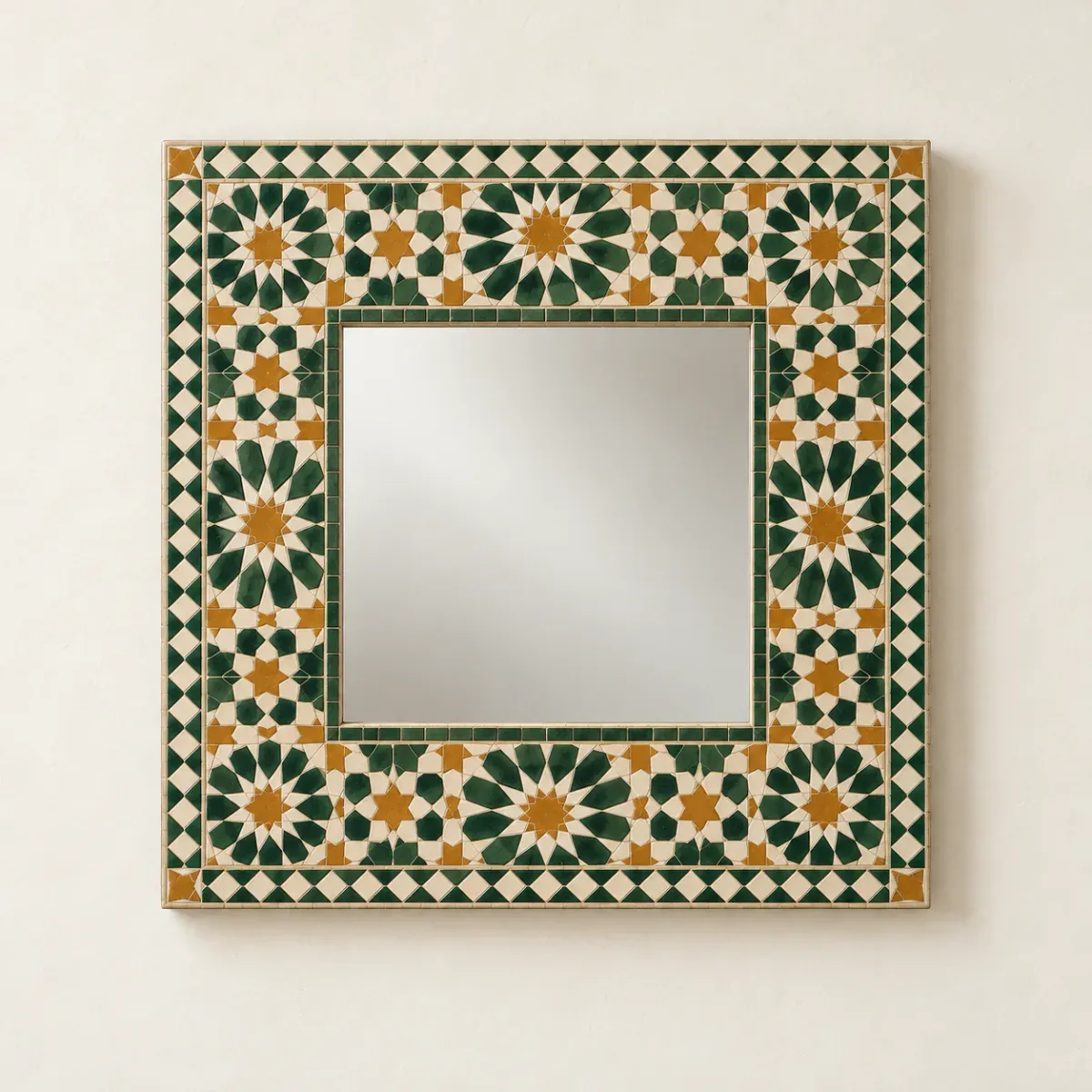
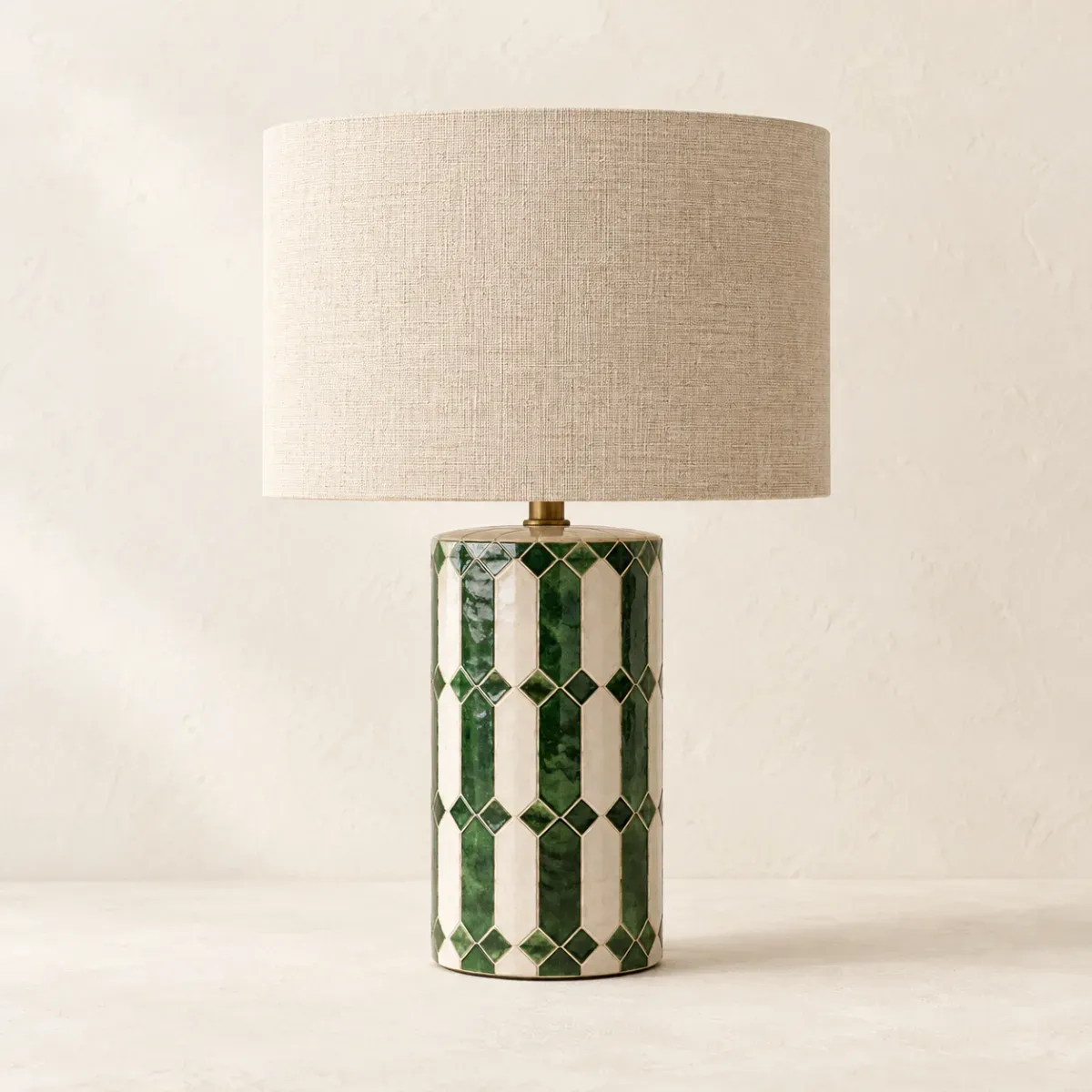
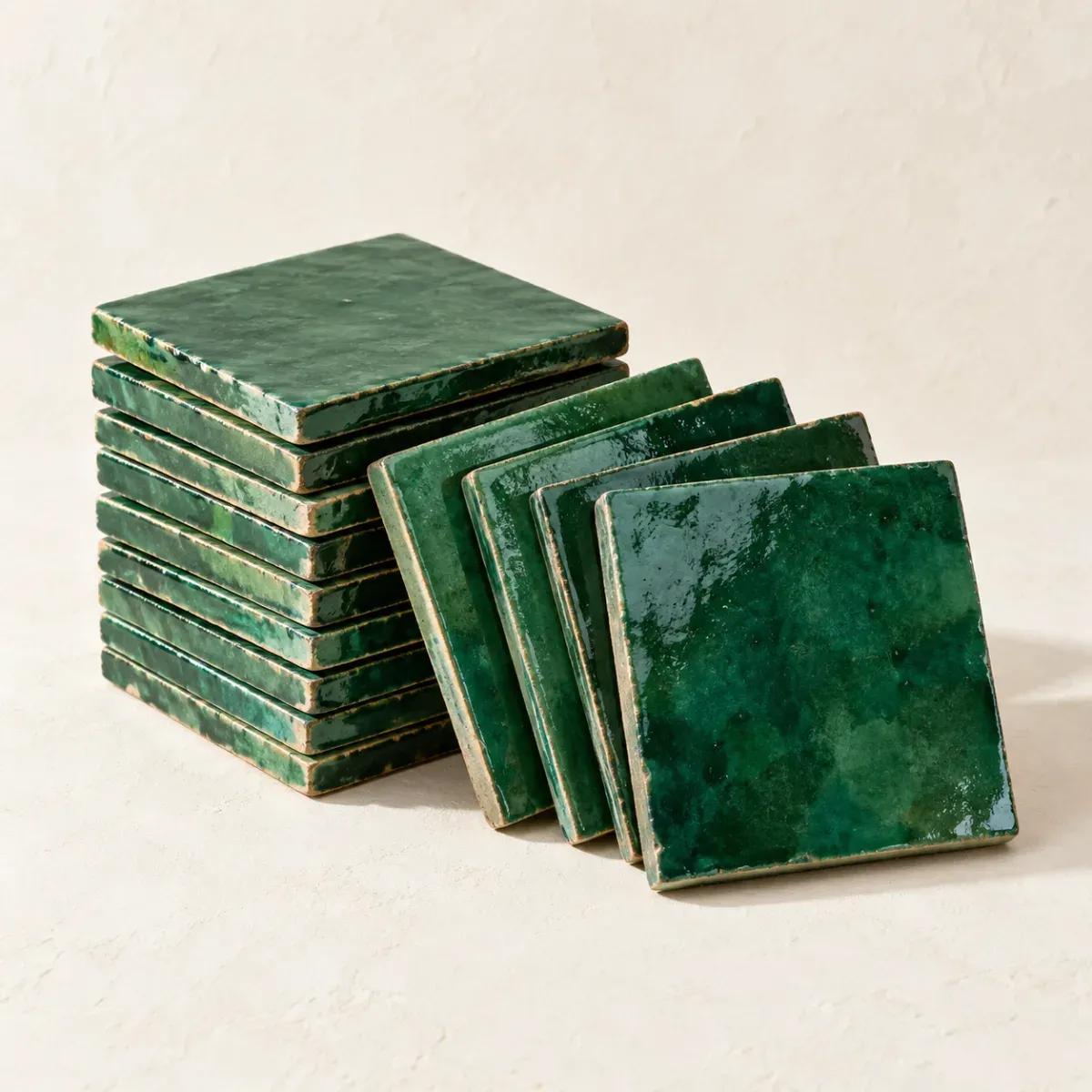
Tables, mirrors, lamps and tiles cut by hand in Fez and Tetouan.